The most useful parent-teacher conference questions ask for an example of your child's progress, one priority to work on and a clear next step. Choose three questions before the meeting and leave room for the teacher's concerns. The shortlist below is a starting point, followed by questions for different ages and a copyable note sheet.
If you want help turning homework worries and past notes into a focused agenda, SimplerChat can help you prepare it and keep track of the agreed follow-up. First, choose the questions that matter for this appointment.
Five questions to bring to a short conference
If your appointment is ten or fifteen minutes, use these as a shortlist. You may cover several through the teacher's explanation without asking each one separately.
- What can my child do independently now that was difficult at the start of term? Ask for an example so you have something specific to recognize at home.
- Could we look at one piece of work that shows what they need to practice next? Ask the teacher to point to the part they would work on first.
- When does my child participate most comfortably, and when do they hang back? This leaves room to discuss group work, play, confidence or asking for help.
- What is one manageable thing we could try at home, and how should we do it? If the suggestion needs materials or a particular teaching method, ask for an example before leaving.
- What will each of us do next, and when should we compare notes? Record a date or a clear trigger for getting back in touch.
You can introduce your priorities in one sentence: "I'd like to understand how reading is going and talk about the homework taking so long. Is there anything you want to make sure we cover?"
If the teacher raises an unexpected concern, use the time on that. Save the remaining questions for a follow-up conversation.
Keep the questions and follow-up together in SimplerChat
A useful conference plan starts with something specific: “Homework took forty minutes on Monday,” or “They say they have nobody to sit with.” Add your observations and the note sheet below to your Personal chat. SimplerChat can help you turn them into clear questions and save an editable conference note, ready to open at the meeting.
Help me prepare for [child]'s conference with [teacher]. Here are my observations: [examples]. Suggest three questions that would help me understand what happens at school. Save my chosen questions and this note sheet as a conference note.
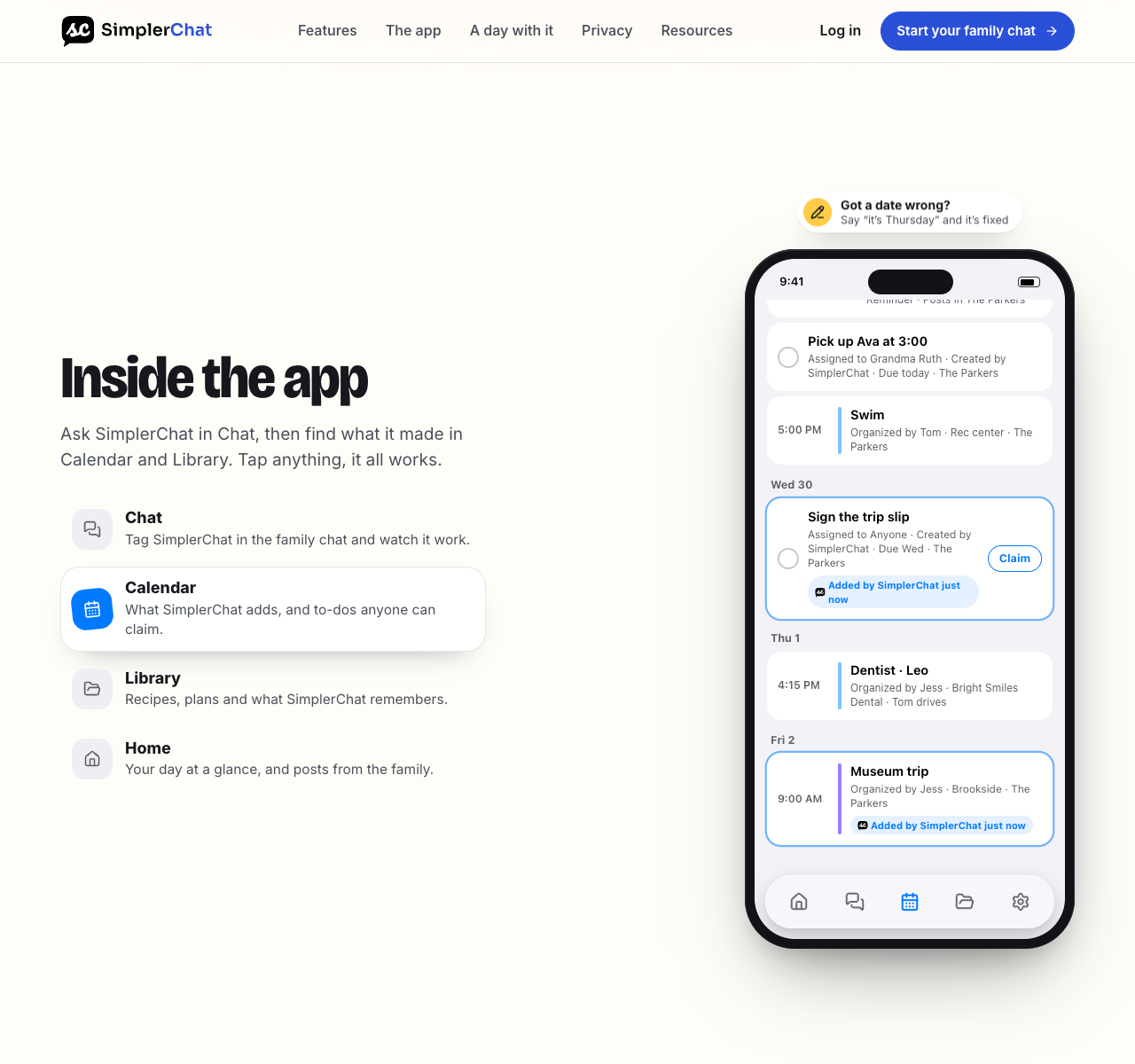
Afterward, add the teacher's answers and ask the assistant to update that same note with the agreed next steps. It can create a home-action to-do and a reminder for your follow-up date. For example, “Collect two writing samples before our November 20 check-in” becomes a dated task you can complete. In a family chat, a caregiver can claim the task and both adults can refer to the shared plan. Notes, reminders and shared tasks in SimplerChat
This is especially useful when you meet several teachers or share home practice with another adult: you have one place to return to for the questions, answers and work still due. Keep sensitive details in your Personal chat and share the parts needed for the household plan.
Prepare your conference note in SimplerChat.
Prepare with your child
Ask your child to tell you about one part of school they enjoy and one part they would change. Offer to raise a question on their behalf. New York City Public Schools recommends involving children in preparing questions and reviewing their progress before a conference. Its guidance also treats friendships and the classroom experience as part of the conversation. NYC Public Schools conference guidance.
Then choose a recent example from home. "Homework is hard" gives the teacher little to work with. A hypothetical observation might be: "On Monday and Wednesday, the math sheet took about forty minutes. Most of that time was spent trying to start the word problems." Use your own dates and timings, and bring the sheet if you have it.
Check the appointment details, including whether your child should attend. For a video meeting, save the link and open any work samples beforehand. If you need interpretation, ask the school ahead of time how it can arrange support.
Choose extra questions for your child's age
Pick one or two that match something you want to understand. These prompts are suggestions to adapt to your child and their classroom.
Preschool and kindergarten
- When my child wants to join an activity, how do they approach the other children?
- Which part of the day needs the most adult help, and what makes it easier?
- What have you seen them persist with lately, even when it was difficult?
- Is there a classroom routine we could practice in a similar way at home?
Ask about something the teacher has observed during play or a routine. A drawing, a description of a conversation or a photo of something your child made can give you a useful starting point. NAEYC's conference guidance recommends that educators share selected work samples, exchange observations with families and agree on goals. NAEYC, Teaching Young Children, pages 19 and 20.
Elementary school
- When my child gets stuck while reading, what do you see them try first?
- Could you show me how they are being taught to solve this type of math problem?
- Which part of a writing assignment is hardest to finish: getting an idea down, organizing it or reviewing it?
- How does my child respond when a partner has a different idea during group work?
If a score comes up, ask what skill it measures and what the teacher sees in everyday classwork. Write down any unfamiliar term so you can clarify it during the meeting.
Middle and high school
- Which recent assignment gives the clearest picture of what my child understands?
- Where are they losing marks, and can we look at an example together?
- How can my child tell the difference between work they need to catch up on and the next assignment to prioritize?
- What would a useful request for help from my child look like in this class?
If you meet several subject teachers, use a separate note sheet for each. Compare the notes afterward. For example, difficulty starting written work in several subjects is worth discussing with your child and the school, while one missing project may call for a more specific plan.
Questions for a specific concern
Use a concrete observation to open the conversation, then choose a question that helps you understand what to do next.
| Your concern | What to ask |
|---|---|
| Homework takes much longer than expected | “How long do you expect this task to take, and what should we do when my child gets stuck?” |
| Your child seems behind | “Which skill should we work on first, what support is available at school, and when will we review progress?” |
| Work seems too easy | “Where could my child go deeper, and what would appropriately challenging work look like?” |
| Friendships or feeling left out | “What have you noticed during group work or breaks, and who can my child go to for help?” |
| Missing assignments | “Where should we check for missing work, and which item should my child finish first?” |
Share what you have actually observed and ask the teacher what they have seen. If a concern needs a longer discussion or another staff member, agree on the next contact before the meeting ends.
Follow-up questions when something is unclear
| What you hear | A useful follow-up |
|---|---|
| "They need to focus more." | "Could you describe a recent task when that was difficult, including what happened before they lost focus?" |
| "They are doing well." | "What is the next piece of learning they are ready to work on?" |
| "They need more confidence." | "When do you see them hesitate, and what response from an adult seems to help?" |
| "There is a problem with group work." | "What happened in the most recent example, and what have you tried so far?" |
| "They should practice at home." | "Could you demonstrate one activity and explain what I should watch for?" |
If home and school sound very different, describe both settings: "At home, they will talk for a long time about a book. You are seeing them stay quiet during reading discussion. Could we look at what is different about those situations?"
For a concern that needs more time or another staff member, ask who should join the next conversation. Write down the contact and what you need to send them.
Copyable conference note sheet
Copy this into a note or print the section. Fill in the first four lines before the appointment. During the meeting, short phrases are enough.
Child / class:
Teacher / meeting date:
My child's question:
My three priorities:

Something my child is doing well:
Example the teacher shared:

Skill or situation to work on:
What we saw at school:
What we saw at home:

Action at school:
Person responsible:

Action at home:
Person responsible:

Materials or explanation we still need:
How we will notice progress:
Follow-up date and contact method:
Question to save for another meeting:
Keep "how we will notice progress" concrete. In a hypothetical writing discussion, the plan might be for a child to use a three-box planning sheet and bring two completed examples to the next check-in. The teacher can help choose a suitable measure for the actual concern.
Send a short follow-up
Before leaving, read back the next steps. Afterward, share the relevant parts with your child, including something the teacher appreciated about their work.
A follow-up message can be brief:
Thank you for meeting today. We agreed that [child] will try [action] at home, and you will [school action]. We'll look at [example or sign of progress] and check in on [date] through [contact method]. Please let me know if I've misunderstood anything.
If the meeting ended before your main concern was addressed, say what still needs discussion and request another appointment. Keep your notes together so you can bring the examples and agreed actions back to that conversation.
Keep the appointment and its preparation deadlines in your calendar. Our guides to school dates on iPhone and school dates in Google Calendar explain how to add them. For later teacher messages, use the school email routine to carry the agreed actions forward.
Conference notes, shared tasks and reminders are included free, along with every other SimplerChat feature. The free plan limits daily assistant messages, with no paid feature gates. SimplerChat shows no ads and never sells your data.
Save your conference questions in SimplerChat and return after the meeting to record the agreed home actions and follow-up date.
Published by SimplerChat. Available in the US and Canada excluding Quebec, for ages 13 and above with guardian permission where required. Eligibility